👸🏼 Ella, elle l’a
THE ROAD TO 2027. After three weeks of street clashes, the polls clearly show the direction of the next Presidential election. Until recently, it looked like three candidates would scramble for second place behind Marine Le Pen. The three amigos were the hard-left veteran Jean-Luc Mélenchon, former PM Édouard Philippe and MEP Raphaël Glucksmann. But that is changing. Five polls have come out since 17 October, from Ifop, Harris Interactive, OpinionWay, Ipsos and Cluster17, and they all seem to agree on the same thing: on May 2, next year, the French will have to choose their new President between the two extremes: Le Pen against Mélenchon.
So the centre panicked, in its own way. On 28 October Gabriel Attal, another of Macron’s former prime ministers, went on TF1’s evening news to propose a “grande primaire des démocrates”. That would be an American-style primary for every candidate from the centre and the right. Anyone who stayed away would have the division on their conscience. David Lisnard, the mayor of Cannes and also a candidate, was delighted. Conservative leader Bruno Retailleau's camp called it “a storm in a teacup”. Philippe, who polls well ahead of Attal, dismissed it in Le Monde on Sunday as a byword for “division and confusion”. The centre is now divided over whether it is divided.
💶 Les gros problèmes d’argent
French public debt now stands at 3,595 billion euros, or 119 per cent of GDP. Senioractu, a website for the over-sixties who presumably remember when France had money, worked out which president was the biggest spender. Under Chirac, debt rose by 7.7 percentage points of GDP. Sarkozy added 26.2 points, still the record, blaming the banking crisis. François Hollande was modest at 7.1. Then Macron let rip again: 20.2 points since 2017. That is fewer than Sarkozy, but the biggest rise in euros, at 1,363 billion, with COVID as his explanation.
Interest payments will rise from 79.2 billion euros this year to 91.2 billion in 2027. That is roughly 1,300 euros a year for every person in France, babies included, before a single teacher or nurse has been paid. The markets have noticed. On 21 October the interest rate on ten-year French government bonds briefly topped 5 per cent, for the first time since 2002. Since September, France has been paying more to borrow than Italy and Greece. Anyone who had predicted in 2011, at the height of the euro crisis, that Athens would one day borrow more cheaply than Paris would have been laughed out of Brussels.
You don’t need to be a genius to see that France has lost control of its finances, assuming it ever had it, and is driving straight at a wall. The country has not balanced a budget since 1974, the year ABBA won Eurovision with Waterloo. Then again, there is nothing new under the Sun King. Louis XIV was hooked on credit too and left his country in a financial mess. His successor, Louis XVI, had to summon the Estates-General in 1789 to sort out the bill, and we all know how that ended.
The “spread” with Germany is the gap between what Paris and Berlin pay to borrow, and it is the markets’ favourite fever thermometer. It has been hovering around 160 basis points in recent days. In plain English: lenders trust France noticeably less than its neighbour.
Then there are the credit ratings, which work like school reports for countries: they tell lenders how likely they are to get their money back. On 23 October Moody’s left France at Aa3, with a negative outlook, although nearly every economist had expected a downgrade. Prime Minister Sébastien Lecornu cheered that the decision had confounded “the gloomy predictions of many experts”. Self-belief is also a talent. Moody’s rival Fitch was less generous last Friday. It kept France at A+, but cut the outlook from stable to negative, citing “persistent political fragmentation and a difficult social context”. In other words: the report is still decent, but the teacher has asked to see the parents.
👮🏽♀️ Prisonniers politiques
Our regular crooks’ corner. France has almost 35,000 municipalities, more than Germany, Italy and Spain combined, so there is never a shortage of mayors for this section. A quick legal guide: garde à vue is police custody, a first-instance verdict can be appealed, and everyone is presumed innocent until the last court has spoken.
Since the last edition, plenty of mayors have once again strayed off the path.
- Albiez-Montrond. The former mayor of this Alpine ski village got six months suspended and six years’ ineligibility on 16 October for conflict of interest and favouritism. He gave the church roof repairs to his brother-in-law’s firm. The roof was never repaired.
- L’Île-Rousse. A court had to remind the deputy mayor of this Corsican town that assaulting a female councillor does not count as good governance. He was fined 1,500 euros.
- Rethel. Prosecutors asked for three years, two of them suspended, against the mayor of this Ardennes town for allegedly fleecing an elderly couple.
- Lamarche. The mayor of this Vosges village has been formally charged with the rape of a minor under 15, which he denies.
- Sillans-la-Cascade. The mayor and a deputy mayor of this Provençal village were taken into custody for alleged attempted extortion of a local family.
- Drancy. Jean-Christophe Lagarde, a former MP and mayor of this Paris suburb, will stand trial for organised fraud.
On the other side of the planet lies New Caledonia, some 17,000 kilometres from Paris and still a slice of France. There the appeal court upheld the convictions of Philippe Gomès and Philippe Michel for paying party staff with public money. Gomès got four years and Michel three, partly served under electronic tag, and both are barred from office for five years. The long arm of French justice evidently reaches the Pacific.
📰 Faits divers
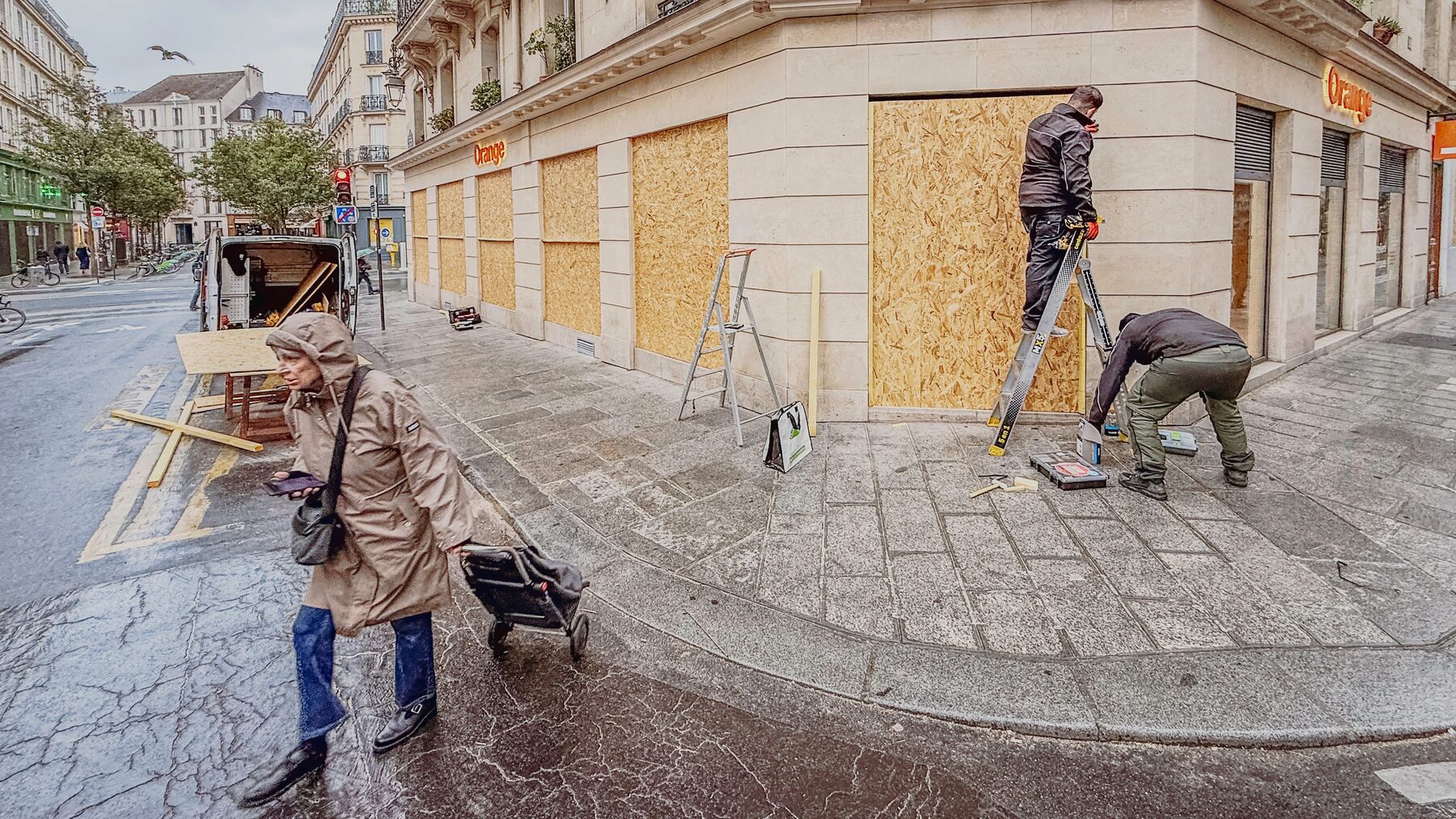
✚✚✚ 📺 Almost 600,000 people have signed a petition to shut down CNews. It is the populist news channel owned by billionaire Vincent Bolloré, often described as France’s answer to Fox News. ✚✚✚ 🛍️ Saturdays belong to the protesters, Sundays to the shoppers. More than 2,500 shops were damaged; 1,161 were looted or set on fire. Now they will probably be allowed to open on Sundays until Christmas. In France Sunday trading is still a touchy subject, much as it was in Britain before 1994. ✚✚✚ 🏆 Natacha Polony is a journalist who also wants to run in April 2027. She says that after just over two weeks of campaigning, 174 mayors have promised her their signature. To get on the ballot, you need 500, mostly from mayors: a nomination form signed by a small army of village halls. ✚✚✚ 🎶 While the French take to the streets over their shrinking purchasing power, Céline Dion has managed to relieve them of more than 100 million euros. Bonjour, pardon, merci, the Canadian singer serenades them. ✚✚✚ 🏬 BHV, the Bazar de l’Hôtel de Ville, is the famous department store opposite Paris City Hall: think John Lewis in a black dress. Today, after 170 years, it was placed under court protection, with some 700 jobs at stake. The curtain has not fallen yet, but it is already halfway down. ✚✚✚
👂🏽 Machine pour les oreilles
🎖️ Shameless plug: I highly recommend the podcast So French! Every two weeks Sara Bertilsson of The European Correspondent and I go through the latest French political news. Listen or watch the latest episode below.
🇪🇺 Looking beyond France? Follow my journeys across the continent in the newsletter European Dispatches.
🙏🏼 Thank you!
🎼 The paragraph headings are titles of songs that are in the playlist of this newsletter on Spotify. Totally random French music, but a treat for true Francophiles with headphones!
🇳🇱 Er is ook een Nederlandstalige versie van deze nieuwsbrief, klik hier!