Spring arrived this weekend in the way it always does in Europe. The days are getting longer, and terrace chairs appear overnight. In the months ahead, tens of millions of Europeans will do what they always do in this season: move. Across borders, into each other’s cities, cafés, lives.
This freedom to belong, briefly and completely, to somewhere you were not born has become so ordinary that it often goes unnoticed. It should not. No other continent does this at this scale. And yet, even as the terraces fill, something beneath the surface is shifting. Quietly, unevenly, but unmistakably, Europe is testing the limits of its own cohesion.
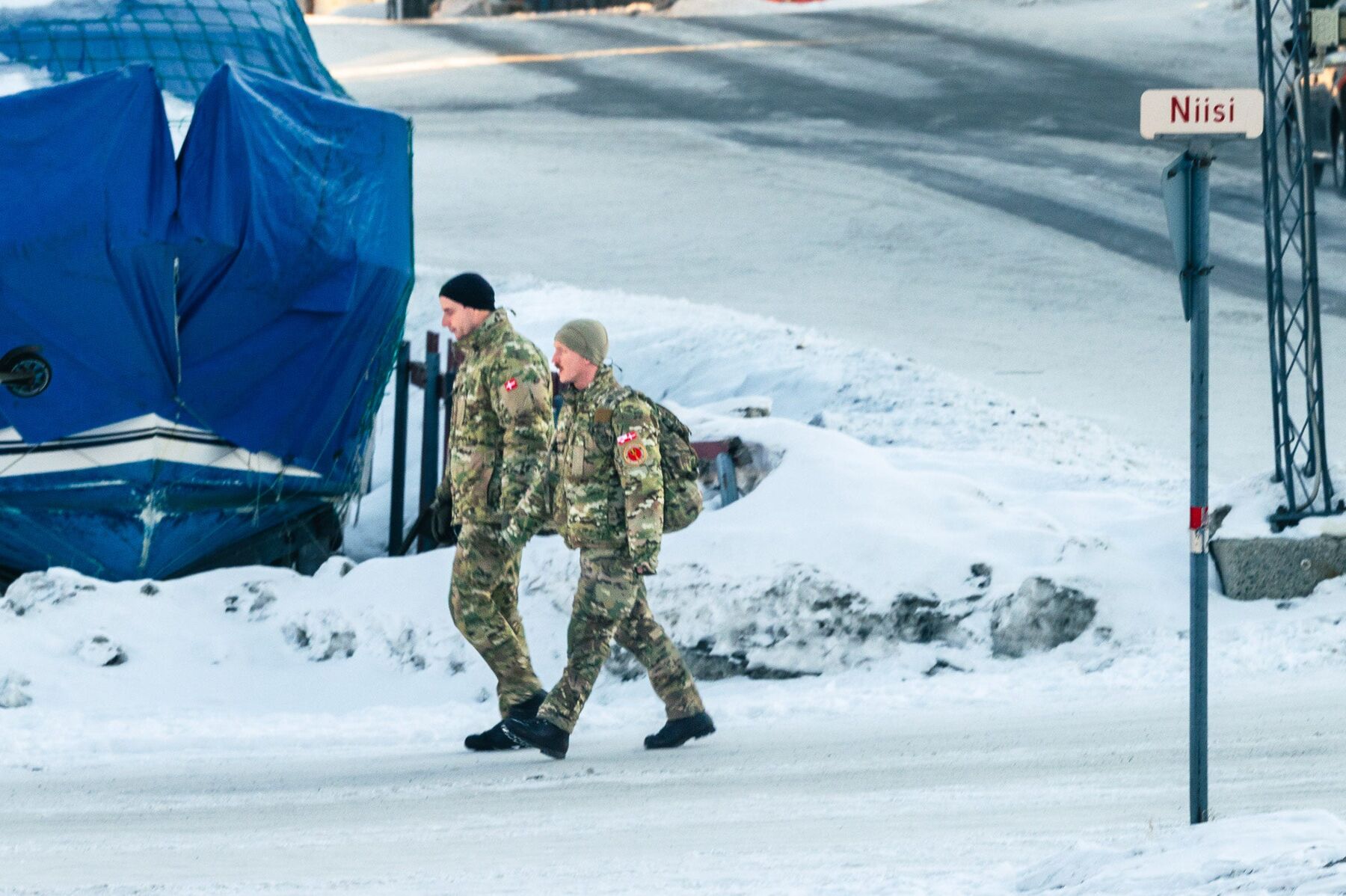
Four weeks ago, I was in Nuuk. I saw Danish soldiers on the quayside and reasonably assumed they were there for Arctic Sentry, the scheduled exercise announced weeks earlier. They were not. As later emerged, those soldiers had arrived with explosives and blood supplies, prepared to destroy the runways at Nuuk and Kangerlussuaq to prevent American military aircraft from landing. The trigger was 3 January: the morning Washington attacked Venezuela, and Copenhagen understood that threats had become action. Within days, European troops were on the ground.
In Greenland, I learned something simple. It cannot be taken. Not really. It is too vast, too empty, too absolute. Standing there, the fjord frozen behind me, the sky immense, the silence complete, I thought: this is the most geopolitically loaded landscape I have ever seen. What I did not yet know was that the soldiers in front of me were prepared to fight for it.
Against America.
That moment now reframes everything that followed.
Last week’s EU summitlooked, on the surface, familiar. Leaders gathered, statements drafted, disagreements managed into language. Yet the context has changed. Europe is now exposed to decisions taken elsewhere, with consequences it must absorb. Oil prices rise, supply chains shift, security assumptions fracture. The alliance that underpinned European stability for decades is no longer a constant.
Some leaders saw this earlier than others. Spain’s Pedro Sánchez was among them, arguing well before the current escalation that Europe needed greater strategic autonomy and a recalibration of its dependencies. As of March 23, no European leader has explicitly credited him for being ahead of the curve. This is unsurprising. Leaders rarely acknowledge that a peer saw things more clearly. The implicit vindication, however, is substantial.
And still, Europe hesitates. Orbán blocked the €90 billion Ukraine loan. Robert Fico, Slovakia’s PM, joined him. Meloni signalled understanding. On Iran, no decision. The continent most directly affected by instability to its south and east produced a communiqué.
There is a deeper layer to that hesitation. Trust inside the room itself is eroding. Polish Prime Minister Donald Tusk suggested this weekend that it should not surprise anyone if Orbán’s circle shares details of EU Council meetings with Moscow, adding that such suspicions have existed for a long time and influence how openly leaders speak behind closed doors.
If that is even partly true, the implications are profound. The European Council, designed as a space for frank exchange among allies, becomes a place of calculation and self-censorship. Strategy turns into theatre. Words are weighed not only for their meaning, but for where they might end up.
The language of unity persists. The reality underneath it is harder, more fragmented, more national.
Borders are back
That fragmentation is no longer confined to foreign policy. It is creeping into the everyday mechanics of European life. This weekend, several Central European countries introduced fuel limits and restrictions on cross-border purchases, in an attempt to shield domestic supply. Drivers crossing borders now encounter caps, controls and price distortions that differ from one country to the next.
Each government acts in its own interest. Each decision is rational on its own terms. Together, they erode something that took decades to build: the assumption that movement within Europe is frictionless, predictable and shared.
The pattern repeats elsewhere
In France, the major cities held for the left, while the extreme-right RN deepened its presence in smaller towns, widening a geographic divide that will define the presidential election next year. In Slovenia, a razor-thin result in a campaign overshadowed by allegations of foreign interference suggests that the techniques of democratic disruption are now operating within the Union itself. But the axis Orban-Fico appears to have stalled, which is a relief for now. In Italy, an unusually high turnout in the judicial reform referendum signals mobilisation around institutional questions that were once the domain of specialists.
Different countries, different issues. The same underlying dynamic: pressure on the systems that hold European societies together.
Tomorrow, Denmark votes. Prime Minister Mette Frederiksen called this election from a position of weakness and turned it into a test of resolve. Greenland gave her a stage on which to act. She sent troops, drew a line, and recovered politically. Whether that translates into victory remains to be seen. Housing, cost of living and domestic fatigue remain powerful forces. I think that a leader going to the polls on a platform that includes standing up to Washington is not something very common in the EU.
Spring has arrived. Europeans will travel, as they always do, across borders that still feel open, into cities and seaside resorts that still feel shared. But beneath that movement, something is changing. Freedom, security, and cohesion were never separate achievements. They were part of the same construction. For the first time in a long time, that construction is being tested all at once.
From Amsterdam, on the first Monday of spring: Enjoy the week ahead!
European Dispatches is published every Monday at noon (CET)