🛂 The Border is a Rumour
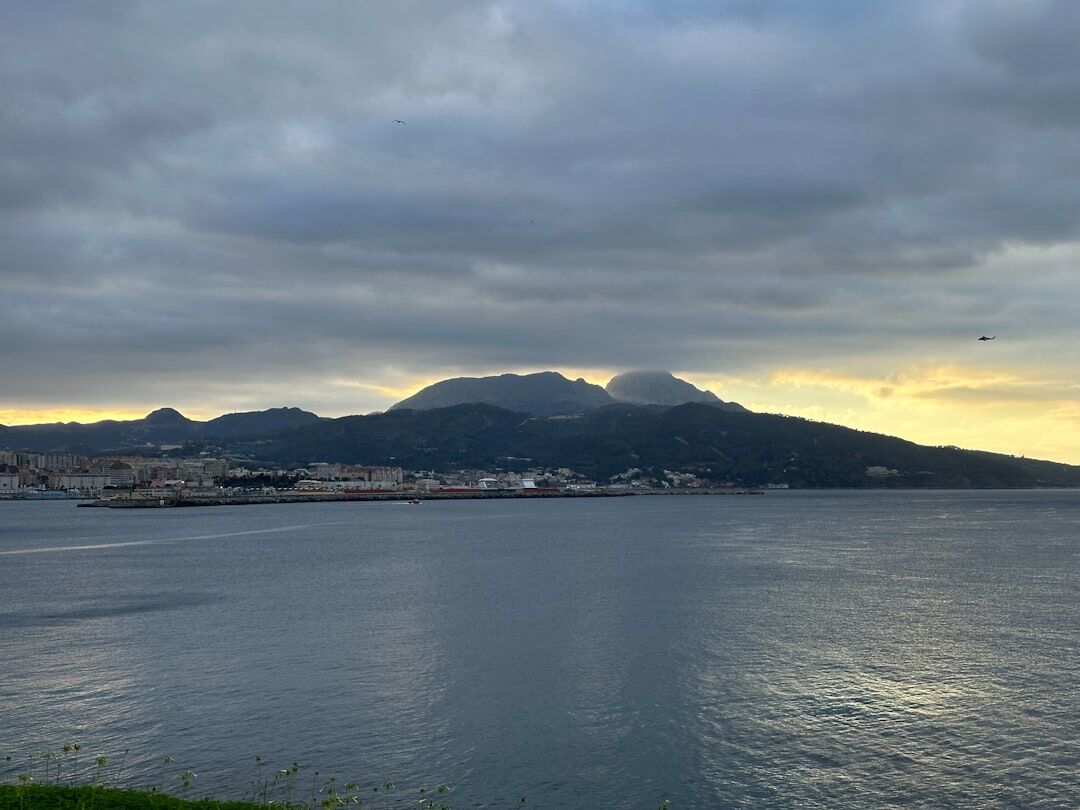
A border is not a line. It is an agreement about what a line means, and agreements are fragile things. They hold for decades and then can dissolve in an afternoon. On the night of 30 July, tens of thousands of young Moroccans walked out of Tetouan in the dark towards Ceuta because a sentence on a screen told them the frontier would open. The sentence was false, but that did not stop roughly 80,000 people from entering the enclave on 30 and 31 July, and by the following Tuesday, all but about 2,000 had gone back, under an arrangement Madrid and Rabat negotiated within hours. At least 141 died. Spain’s government came under attack from twenty-two fellow EU leaders; Italy and Spain began checking each other’s passengers; and Brussels briefly debated suspending Spain from Schengen. The rumour travelled faster than any migrant, and it did more damage. There is, however, as Patrick Weil argued in Le Grand Continent, no European migration crisis. Quite the opposite. Frontex recorded about 178,000 detections of irregular border crossings at the EU’s external borders in 2025. That was 26 per cent fewer than a year earlier and the lowest total since 2021. In the first five months of 2026, detections fell by another 40 per cent compared with the same period last year. Europe is arguing as if irregular migration were spiralling out of control.
Borderline
Consider what the twenty-two leaders put their names to. The letter, drafted by Meloni and Frederiksen, attacks Spain’s extraordinary regularisation programme, initially expected to benefit about 500,000 people but ultimately attracting 1.17 million applications. It applied to people already in Spain before 1 January 2026, not to anyone arriving in Ceuta at the end of July. It also blames the Supreme Court’s ruling of 8 July, which held that people arriving by sea are entitled to an individual assessment rather than summary return. Twenty-two heads of government have signed a document criticising a member state because its judiciary applied the law.
Tahar Ben Jelloun, interviewed in El País, saw it from the other shore. Italy has regularised migrants without making a noise about it; when Spain does the same, the continent discovers a pull factor. He is equally hard on his own country, which has the most capable police force in the Maghreb and watched tens of thousands of young men walk north. What was missing, he says, was political intelligence.
Then the theatre. On 1 August, Italy reintroduced air and sea checks on travellers arriving from Spain, a country with which it shares no land border, on the theory that people in Ceuta might reach Sicily by way of France, which has maintained internal controls for over a decade. Since 8 August, Spain has been checking travellers arriving from Italy. Two of the Union’s largest economies are asking each other’s tourists for papers to make a point, under the Pact on Migration and Asylum in force since 12 June that commits the Union to an area without internal border controls. The Commission’s register of temporary reintroductions has not been empty for ten years.
No country for young men
This was an information event before it was a migration event. A distorted reading of the court judgment circulated alongside a timestamped rumour. Then, on 1 August, the second wave: accounts linked to the Russian military and to organised far-right networks recast the whole thing as a coordinated assault with official complicity, reproduced in seven languages and drawing over 720,000 views in six hours. Some called for nationalists to travel to Ceuta and patrol homes and businesses.
Brussels responded by asking Meta and TikTok to try harder. Thierry Breton, who wrote the rules Henna Virkkunen now administers, pointed out the obvious: the Digital Services Act exist precisely for this, and not one has been activated. We still do not know who seeded the rumour, because nobody has demanded the data. A regulation left unused at its first real test is not a regulation. It is a posture.
Nor should we be naive about Rabat. In April, a US House Appropriations Committee report described Ceuta and Melilla as located in Moroccan territory. Morocco maintains excellent relations with Washington and Jerusalem, both of which have spent the past year attacking Pedro Sánchez over Gaza, and both of which would prefer a Europe run by nationalists.
Underneath everything sits a Moroccan paradox. The country is not an economic ruin. The IMF estimates growth of 4.9 per cent last year and 4.4 this year; the World Bank calls 2025 the strongest performance in a decade, and notes labour underutilisation of 22.5 per cent in the same breath. What Morocco does not produce is a first rung. Strict unemployment is 9.5 per cent, but 27.2 per cent among the 15 to 24s and 16.7 per cent among graduates, against 3.8 per cent for those with no diploma at all. A crowd is not a census, but that gap is where the rumour found its audience.
MY VIEW: This is what Europe looks like if the nationalist parties get their way. Or perhaps drop the conditional, because by signing that letter the twenty-two did the work for them. Besides Spain, only France, Ireland, Portugal and Luxembourg refused. Among the signatories are men who call themselves convinced Europeans: Rob Jetten, Donald Tusk, to name but two. They lined up behind a document blaming a member state for a court ruling, and in doing so actively undermined the Union and the interests of its citizens. The populists set a trap in the shape of a photograph of men swimming, and the pro-Europeans walked into it at a jog. Spain’s retaliation against Italy is childish, but Spain did not start it, and childishness is what happens when the adults leave the room.
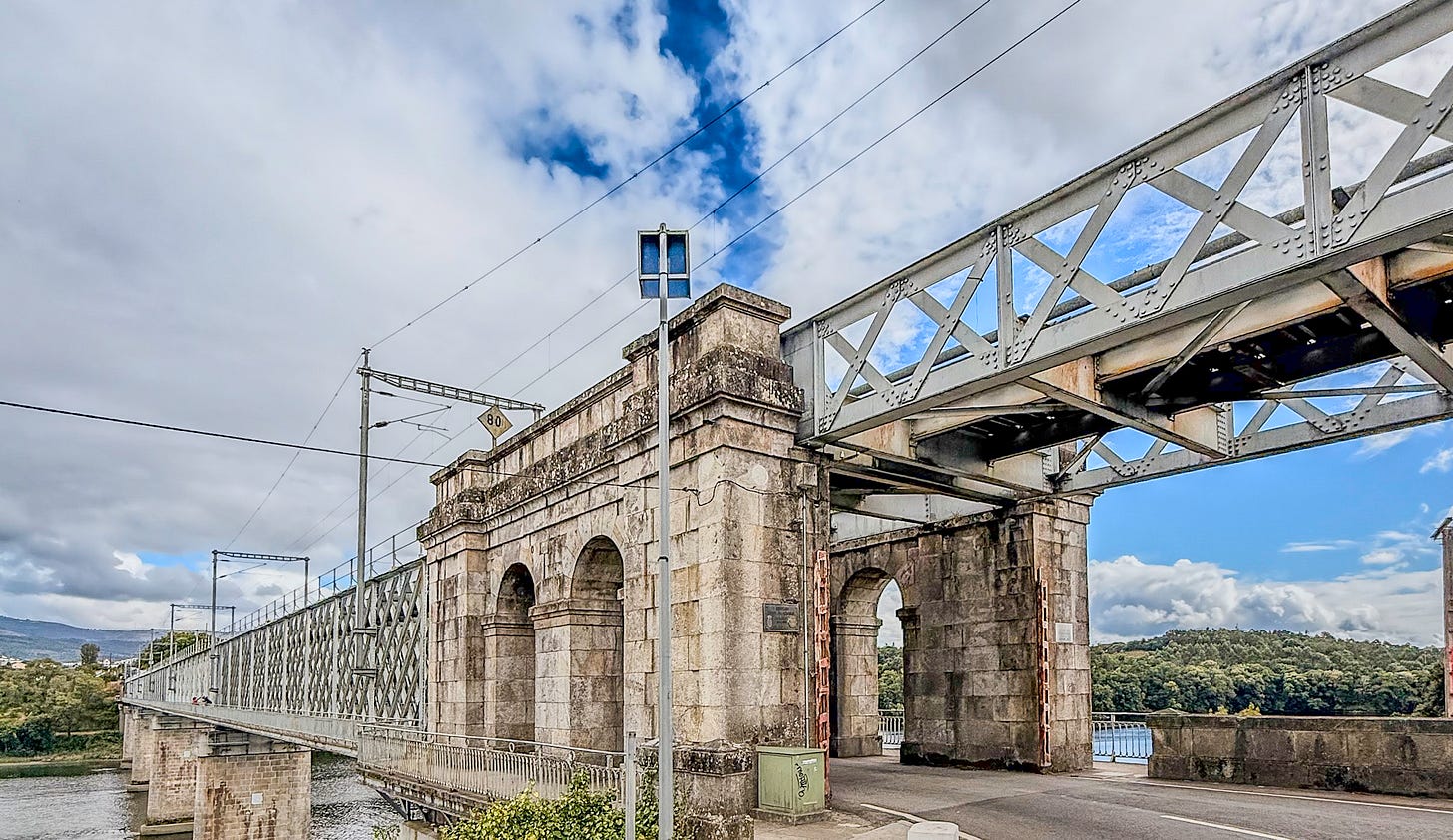
Last week I was at another Spanish border, at Tui in Galicia, where an iron bridge from 1886 crosses the river Minho to Valença in Portugal. You simply walk over from one country to another: no checks, no guards, nothing. Beneath it, people were jumping off a small boat to cool down, half in one country and half in the other, and nobody could have said which half. That is Schengen as it was meant to be. That same week, some 750 kilometres south, people were drowning because a border had been made to mean something again.
The final absurdity is demographic. Europe is ageing, and in places evaporating. Member states already compete for the workers they will need in fifteen years, and several of them spent last week arguing about how to keep out unemployed graduates who had crossed a border and then walked back across it voluntarily.
⛰️ Ain’t no mountain high enough
One border story from this fortnight ends well, and it happened two days before Ceuta. Some 1.4 kilometres beneath the Brenner Pass, Austrian miners working with drill and blast met the Italian bores driven up from the south. Both main tubes broke through almost simultaneously, with surveying deviations measured in centimetres. Austria and Italy are now joined by all three cross-border tunnels of the Brenner Base Tunnel, 220 of a planned 230 kilometres excavated, 2.3 billion euros of it European money. There is footage of the moment: grown engineers embracing in the dust.
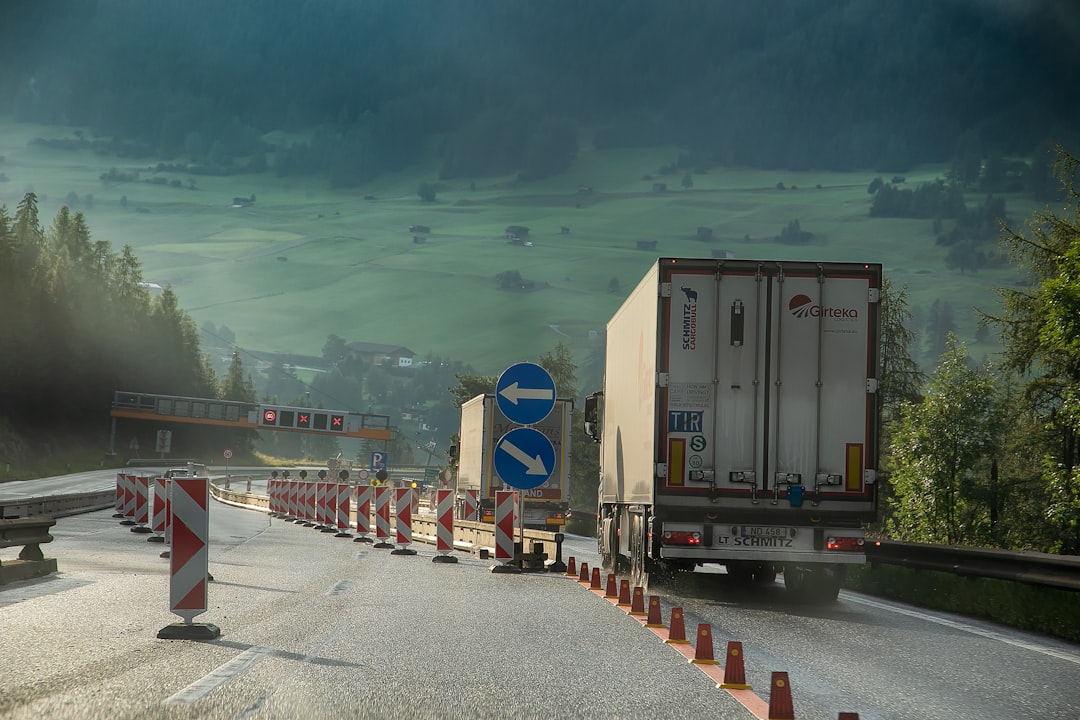
When it opens at the end of 2032, beneath a pass that 2.5 million lorries grind over every year, it will be the longest underground rail tunnel in the world. It became an EU priority in 1994, on the eve of Schengen’s abolition of routine checks at the Brenner, and was designed for a continent that expected its internal borders to stay open. This is the same Brenner where, in 2016, Austria proposed building a fence.
At one border, a rumour killed dozens of people in a night. At the other, two countries dug towards each other through a mountain for years and met in the dark, a few centimetres off. It is worth remembering which of those Europe is actually good at.
⭐️ European Dispatch is published irregularly on Mondays around tea time (CET). Any remarks? Please send me an email.