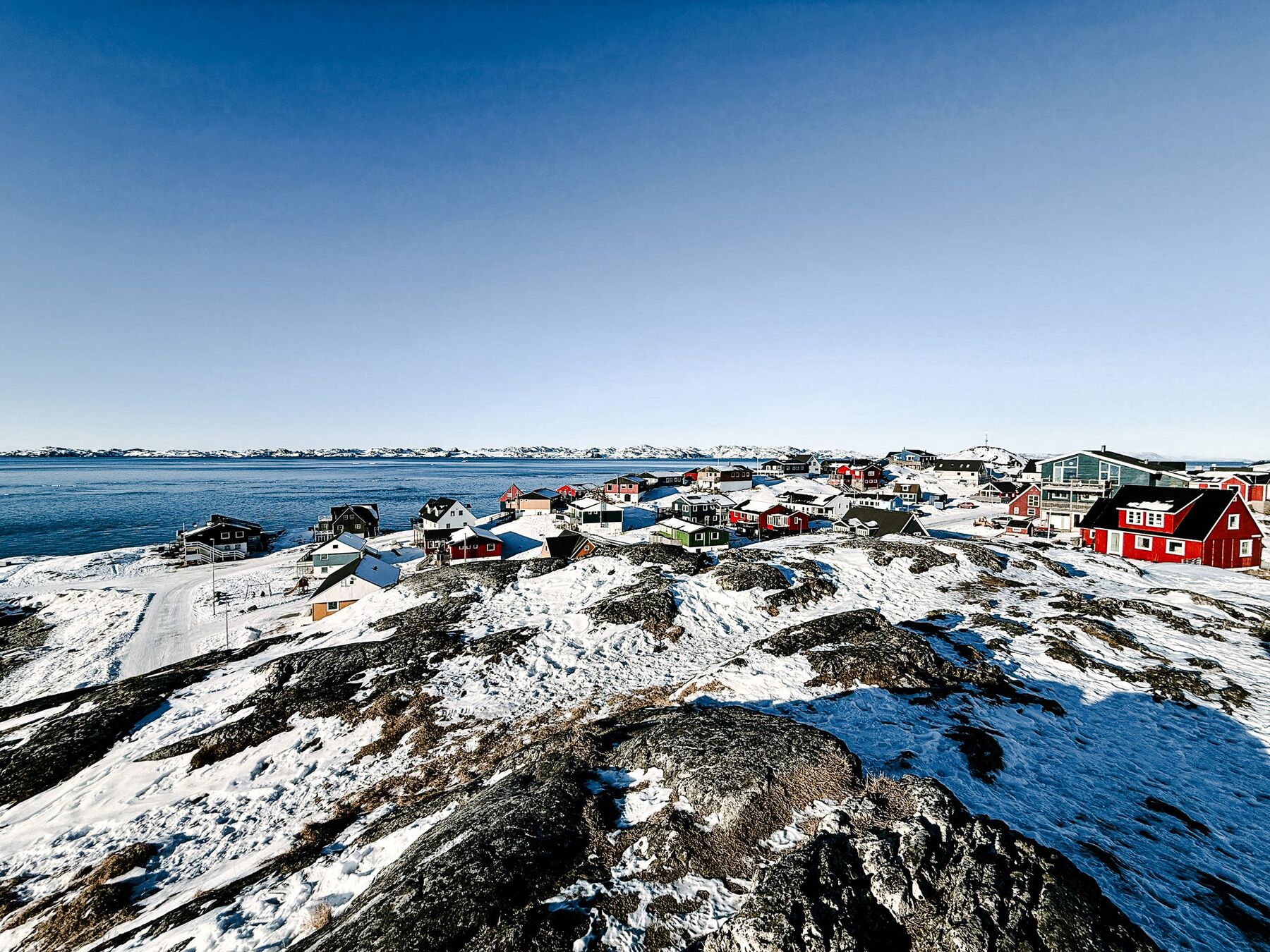
Nuuk reduces politics to scale. Fifty thousand people on a landmass the size of half of Europe. On the day Donald Trump tweeted that a hospital ship was on its way, I stood at the edge of the fjord and watched the horizon. Nothing appeared but ice and trawlers. In town, people smiled at the theatrics, with a trace of irritation. Greenland’s healthcare needs investment, staff and logistics. Copenhagen has pledged more funds. Geography remains the decisive actor.
TEHRAN
From that Arctic stillness, the news from Iran felt almost unreal. After the killing of Ali Khamenei, an Iranian security official announced that a constitutional transition process would begin within days. Europe responded with calls for restraint, protection of civilians and respect for international law. Yet Brussels revealed a fault line. Ursula von der Leyen spoke of a credible transition in Tehran. Several foreign ministers were more guarded, insisting that regime change is not an EU mandate and that common foreign policy is the member states’ responsibility. Coherence, once again, proved fragile.
A coalition of small and medium powers with everything to lose from a world organised by brute force appears to applaud brute force.
There is a deeper discomfort. Europe’s Iran position is difficult to defend on values. It becomes even more difficult when measured against self-interest. Europe backs a war it did not start, will not fight and cannot afford. Washington takes the geopolitical prize. Europe absorbs the consequences: higher energy prices, renewed migration pressure, fresh political volatility and a rules-based order that looks thinner the next time a great power decides it does not require a UN mandate. One wonders who this foreign policy ultimately serves.
PARIS
Meanwhile, Paris prepares a speech on nuclear deterrence. Will Emmanuel Macron attempt to extend France’s nuclear umbrella in a more explicit European direction before he leaves office next year? The force de frappe has always been sovereign. The pressure to Europeanise at least its political framing will grow if American guarantees look less predictable. If la bombe atomique were ever to become something closer to a European shield, it would mark a structural shift in how the continent thinks about power.
BRUSSELS
Tomorrow, the new Dutch prime minister tours Brussels: Commission, Parliament, NATO with Mark Rutte, and a courteous stop with his Belgian counterpart. When in Brussels, one performs Europe. The question is whether performance can evolve into strategy.