🔥 Arsonists at Work
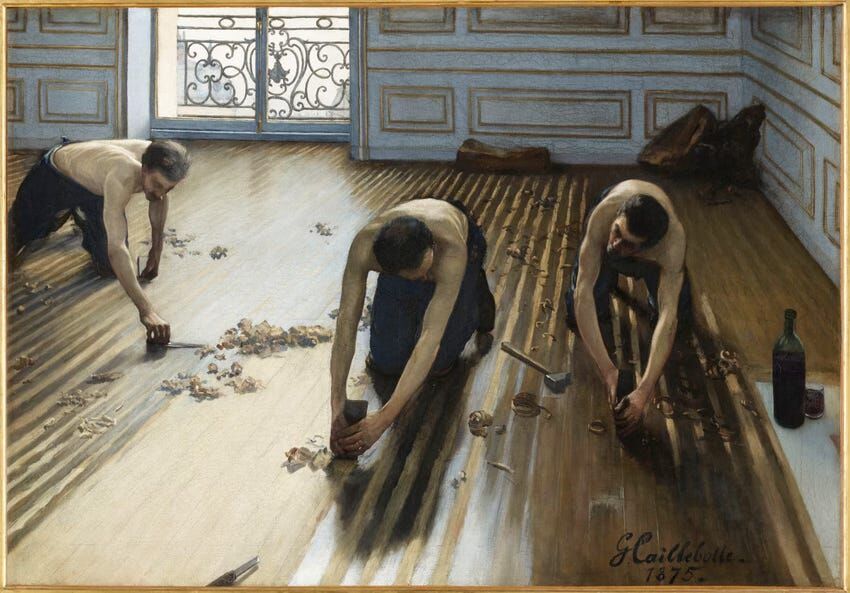
🏠 Imagine hiring a contractor to build your dream house. Upon completion, you discover they forgot the foundation, the house leans dangerously, the toilet isn’t connected to the sewage system, the roof leaks, and the electrician can’t tell positive from negative. As you watch, the house begins to sink, rain seeps through the roof, causing a spectacular short circuit, and the entire structure bursts into flames—setting the rest of the village on fire until it all disappears in an apocalyptic inferno. Now, would you hire the same contractor to rebuild the town? François Bayrou seems to think it’s a fine idea.
The metaphor may be thespian, but as the year winds down, some exaggeration is forgivable. It’s the first thing that came to mind when I read the 36 names on Bayrou’s new cabinet list tonight. Among them are two former prime ministers and 19 ministers and secretaries of state who already served under the wildly “successful” Michel Barnier.
Le Monde has published awho’s who list of the new ministers, including their positions in the ministerial hierarchy. France enforces a rigid pecking order—ingrained, one might say, since primary school.
♻️ Familiar faces
The most striking comeback is Manuel Valls, a man whose only apparent talent is disguising his lack of talent. His appointment as the government’s number three is surprising, given his past affiliation with the Socialist Party (PS), which officially refused to contribute ministers to Bayrou’s cabinet. Valls served as François Hollande’s prime minister from 2014 to 2016. After being rejected by his party and the public, he leveraged his Spanish passport to launch a political career in Catalonia, hoping to become mayor of his birthplace, Barcelona. That bid failed spectacularly, forcing him to slink back to France.
Now, his shameless opportunism has paid off: Valls is the new Minister for the Colonies Overseas Territories, a post that demands immediate attention given the dire conditions in Mayotte. Bayrou likely figured, “The farther from Paris, the less harm he can do.”
Another familiar face is Élisabeth Borne, prime minister until January (notably, not ‘première’ as a francophile would expect). She now ranks second in the government as Minister of Education. Meanwhile, Rachida Dati, the long-serving mayor of Paris’s posh 7th arrondissement and once a minister under Nicolas Sarkozy, remains Minister of Culture.
💶 From Caisse to Chaos?
The boldest appointment is Eric Lombard, a political novice stepping into the critical role of Finance Minister. Till this morning, Lombard headed the two centuries-old Caisse des dépôts et consignations, managing state investments with mixed success (including a substantial share of London buses). His task? To reassure markets and EU counterparts while tackling France’s growing fiscal mess.

In a surprising move, Sébastien Lecornu remains as Minister of Defense, despite Emmanuel Macron’s earlier plans to elevate him to prime minister (see the previous newsletter).
Speaking of France’s fiscal health: In the previous newsletter, I claimed the national debt was rising by €500,000 per minute. Or rather, it was. Recent third-quarter figures now put the rate at €514,000 per minute, bringing the total debt to €3.3 trillion (113.7% of GDP), a new record.
François Bayrou, less than a week into his premiership, is already facing challenges. His government reshuffle looks cosmetic mainly, and while he says it will take ten years to restore fiscal order, those ten years are ticking by at a breathtaking €514,000 per minute.
👌🏼 MERCI !
Thank you for reading and for the kind reactions you have been sending me recently. Please share this newsletter with your colleagues and/or friends interested in French politics. You can find all previous issues here. I welcome your questions and comments at news@devries.fr.
🇳🇱🇧🇪🇸🇷 Do you prefer the Dutch version? Just click here!