BRUSSELS, RUE DE LA LOI
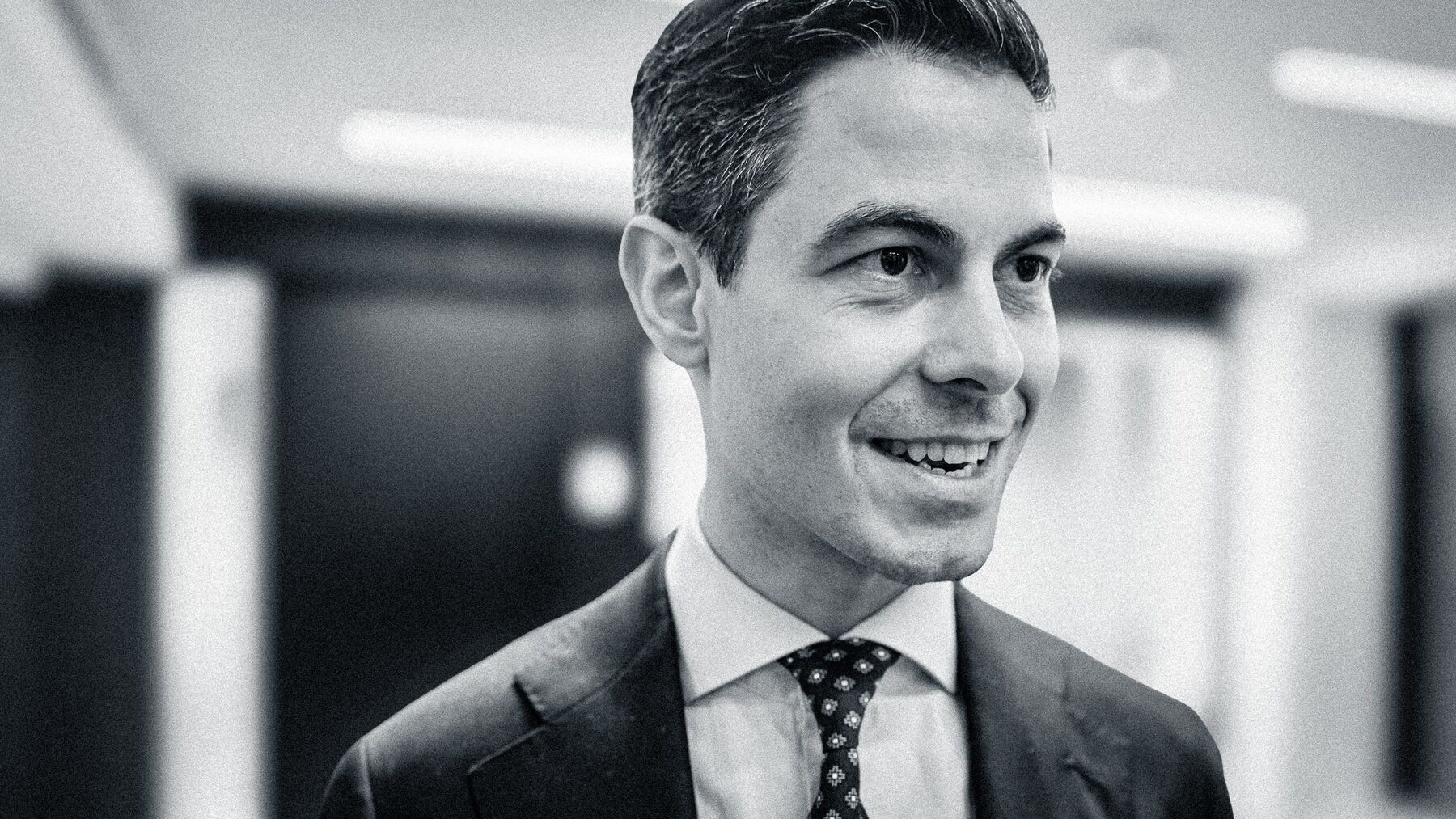
The Permanent Representation of the Netherlands sits on the Rue de Trèves, a street that runs perpendicular to the Rue de la Loi, off the main institutional artery, which is itself already a degree removed from power, a building that interfaces with Europe without being it. Last Tuesday, I was there when Rob Jetten passed through. He was unhurried. He listened more than he spoke. He looked, without apparent effort, like someone who had been thinking about this room for years and had finally been permitted to use it.
His first foreign visit as prime minister was conspicuously sequenced. Brussels before Kyiv, institutions before frontlines. He met Von der Leyen, Costa, Metsola, De Wever and Rutte at NATO (also his predecessor as PM). He called for qualified-majority voting in foreign policy, used Hungary’s veto on the ninety-billion-euro Ukraine loan as a live exhibit of everything that needs reforming, and declared the Netherlands back at the table. The Dutch press admired his English. Brussels admired his fluency with the dossiers. Both admirations are real, and neither is sufficient.
KYIV, SUNDAY
Yesterday, Jetten was in Kyiv, laying flowers at the Wall of Remembrance alongside Zelensky, walking through streets that Russian missiles have made unfamiliar. His second foreign trip in eight days. The sequence speaks: Brussels to establish the European frame, Kyiv to show what it is for. Behind the symbolism lies a specific dispute. Hungary has blocked the EU loan over the Druzhba pipeline, insisting that Ukraine is deliberately withholding Russian oil. Orbán is facing elections. Twenty-six governments are waiting for one to move. Jetten’s presence in Kyiv was not a diplomatic gesture in the conventional sense. It was a statement about which side of the argument the Netherlands has chosen to stand on, made in the city that is bearing the cost of the argument.
In this one recognises the EU’s characteristic gait: collectively agreed, individually obstructed, bilaterally circumvented. Jetten flew to Kyiv not because Brussels authorised him to, but because the framework of shared obligation made the gesture legible. The institution provides the vocabulary. Its member states write the sentences at their own pace.
ARTICLE 42.7, AND A QUESTION FEW ARE ASKING
If the Iran conflict extends — through Gulf energy strikes, targeted cyber operations, or the entanglement of European naval assets operating in the region — Article 42.7 of the EU Treaty suddenly becomes the most consequential clause in European law that most citizens cannot locate. The mutual defence obligation has been invoked once, by France after the November 2015 attacks. It was activated bilaterally, quietly, largely outside the EU institutional structure. The clause provided the legal architecture; the member states made their own decisions within it.
The scenario is not remote. European energy exposure to a Gulf disruption is material. Several EU states maintain forces in the region. Tehran has demonstrated both the willingness and the capacity to act beyond its borders. If 42.7 were triggered, the obligation would be genuine and the mechanism entirely discretionary. No one, in any European capital, imagines the Commission directing a military response. What would happen is what always happens: rapid bilateralisation of a multilateral commitment, with the EU framework lending legitimacy to actions it did not design. Much complaint is made about this apparent institutional slowness. Yet, the EU is most useful to its members at the moments when it appears least capable. Its slow pace is not always a defect. In a world accelerating badly, it is sometimes the closest thing to a conscience that exists.
MORAL DEMOCRACIES
A pattern recurs across European foreign policy debates that is rarely acknowledged as a strength. A government agonises publicly over whether a military action meets the threshold of international law. Parliamentarians want to know if weapons deliveries cross a legal line. Foreign ministers parse UN resolutions with a precision that their counterparts elsewhere find bewildering, occasionally contemptible. The domestic press treats the anguish as indecision. Commentators demand clarity. Polls reward the confident.
But the anguish is not weakness. It is the operating system. European democracies were built, after 1945, on the deliberate premise that power must justify itself in terms that extend beyond national interest. The UN Charter, the Geneva Conventions, and the Rome Statute are not decorative instruments. They are the architecture within which European foreign policy finds its own coherence, however slowly, however imperfectly. When a European government wrestles publicly with whether an action is lawful, it is doing something that separates it from the actors who have decided that such questions are an indulgence. The wrestling is not the problem. It is the point.
This matters more acutely now because the rules-based international order has ceased to be a consensus. It has become a minority position. The United States has stepped back from the role it designed and once maintained. China treats the architecture as a constraint on others. Russia has rejected it outright and paid a manageable price for doing so. What remains is Europe: a bloc of medium-sized democracies, constitutionally committed to multilateralism, in a world that has decided multilateralism is for those who cannot afford better alternatives.
The isolation is real, and growing. So is the responsibility. If Europe does not defend the proposition that international law applies to everyone and that agreements should be honoured, no one else will. The Union is imperfect, slow, prone to the paralysis of its own unanimity rules, and occasionally its own worst adversary. But its imperfection is partly the cost of taking seriously the thing its rivals have quietly discarded: the idea that force requires justification, that the next war is less likely if the current one is conducted within rules that survive it.
Rob Jetten went to Brussels before anywhere else. The day after, he went to Kyiv. He is not a head of government who will reshape the continent. But he understands, intuitively and in practice, that the table is not just a place to sit. It is, at this particular moment in history, the argument itself. And Europe, increasingly, is the only one still making it.