🔥 The Continent is on fire, the debate isn’t
Europe is burning. More than 300,000 people have been evacuated in Spain and France. Flames advance towards Bordeaux, while Spain has declared a national emergency with fires reaching the outskirts of Madrid. France has deployed soldiers, military aircraft and thousands of firefighters. Portugal has sent reinforcements, while a new heatwave will hit the Continent this week. Europe, it turns out, is remarkably good at responding to emergencies. Firefighters cross borders faster than politicians usually do. What was once seen as a Mediterranean problem now reaches the Atlantic coast and the suburbs of Madrid. According to the European Commission, Europe’s wildfire season may now extend into November, underlining how climate change is reshaping what was once considered a summer emergency.
The fires themselves are no longer a surprise. Europe’s political response still is. The area burned by wildfires has risen by more than half in just four years, according to the WHO, yet the debate remains largely about aircraft, evacuation routes and emergency logistics. Jacques Chirac warned at the 2002 Earth Summit that “our house is on fire and we are looking away.” A quarter of a century later, his words read less like a warning than a news headline. Fire ignores borders. Politics, for the most part, still depends on them.
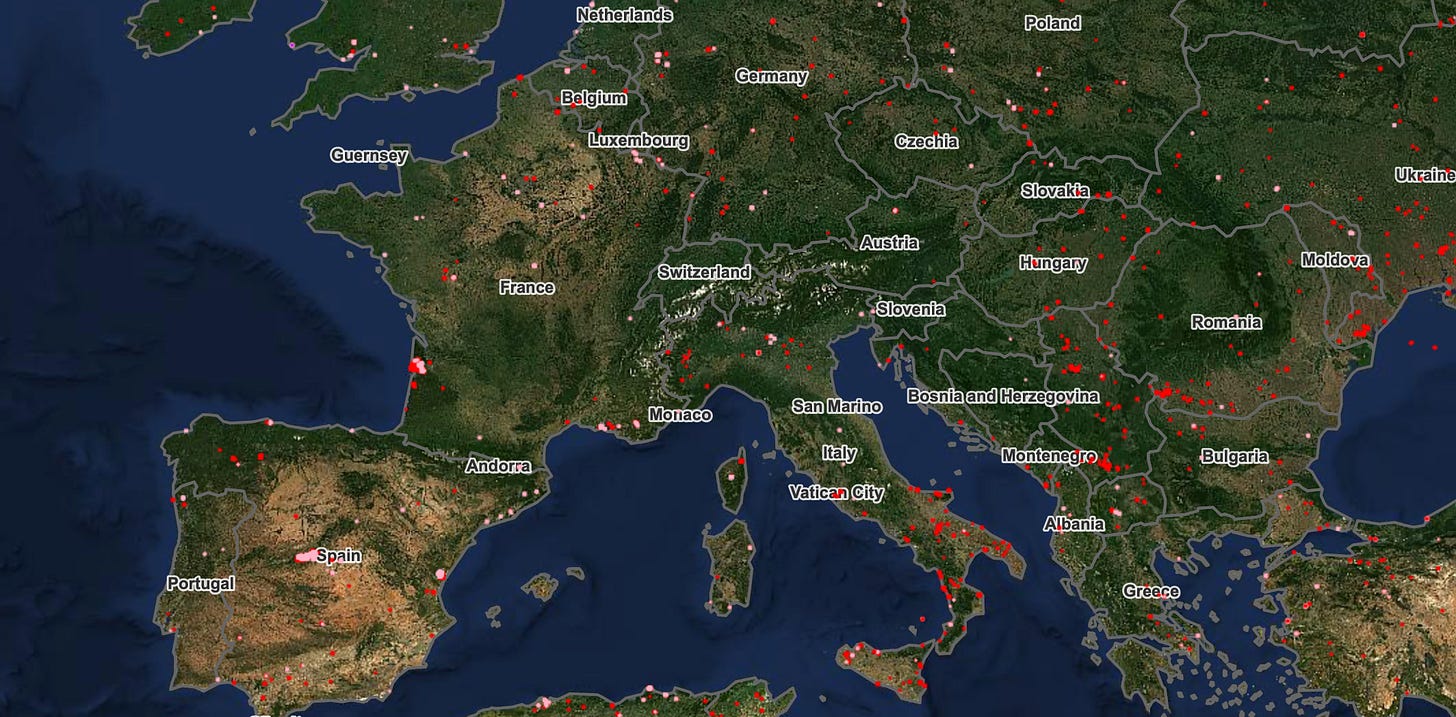
MY VIEW: Every summer, Europe’s wildfires are reported as a story about weather, traffic jams and unfortunate holidaymakers. Television cameras follow exhausted firefighters, military aircraft dropping water and tourists dragging suitcases through smoke. All of that matters. Yet it also risks obscuring the larger story. In an interview published today inEl País, European Commission Executive Vice-President Teresa Ribera put it bluntly: “Europe is not prepared for the consequences of climate change.” Looking at France and Spain this weekend, it is difficult to disagree. Europe has become remarkably good at responding to disasters. It remains far less willing to prepare for the world that is producing them.
The uncomfortable question is whether Europe should start adapting not only its firefighting, but its way of life. If southern Europe increasingly becomes dangerously hot in July and August, does it still make sense that millions of Europeans take their longest holidays during precisely those weeks? Schools in many countries still close for six (NL, Ger, Denmark) to fourteen (! Italy) weeks in the hottest part of the year, sending entire nations south at the same time. Would a shorter summer break, with more holidays spread across spring and autumn, better reflect the climate Europe now has rather than the one it remembers? By October the smoke will have cleared, politicians will have moved on and holiday brochures will once again show empty beaches beneath cloudless skies. Then, next July, millions of us will patiently queue on Black Saturday, driving towards a continent that is becoming one vast summer barbecue.
⭐️ European Dispatch is published irregularly on Mondays around tea time (CET). Any remarks? Please send me an email.